


I’ve been travelling a lot lately and writing less frequently.
Over the Victoria Day long weekend, I took a much needed break while visiting a cottage north of Havelock with some friends.
This past weekend I headed to New Brunswick again to visit my son and his family. He and his wife blessed me with a grandson last September and it is a joy to hold and play with the wee man any chance I get.
Flying back to Toronto now with a heart full of love and a mind full of memories.
No photos of the baby, but I will share a glorious sunset with you.

We need to listen to Ambassador Pete…
I’m going to do something I rarely do, point to an article out of CBC and offer them a compliment. Actually, they would argue it’s not CBC, it’s Radio-Canada, the French version of CBC, but I will still compliment them.
Either way, this piece by Laurence Martin on her interview with American Ambassador Pete Hoekstra is worth the read.
In it, Martin describes how Hoekstra is frustrated and that he feels Canada and the United States could and should be moving further ahead on trade talks. I feel the same way and express my frustration, and the feeling that Carney, and many of his supporters don’t want a deal.
In the interview, Hoekstra said that tariffs are here to stay and Canadians should get used to that idea.
“It’s our policy, and it’s a policy that is uniformly administered,” he told CBC.
Canadians seem to think we are being singled out, we aren’t, but we are acting like we are.
As for tariffs not going away, I’ve been saying this since my visit to Washington in the middle of February 2025. You may recall the trip, spearheaded by Ontario Premier Doug Ford, where all the premiers headed to D.C.
It was on that trip that I first start hearing from American politicians and officials that they felt tariffs were not going away. Even those that were close to Canada said the likely reality in the future is an eventual 10% global tariff.
Believe it or not, many in the industries hit by tariffs of 25% or more say they could live with and still do business with a 10% global tariff but they can’t keep going indefinitely at the current levels.
We had it good for a while with the Americans, but protectionism is in vogue south of the border and as I have long pointed out, it is popular with Democrats as well. We can’t assume that we are going to get rid of all tariffs if the Republican lose the mid-terms or even if there is a change in the presidency.
Tariffs were for a long time, the norm…
Once upon a time, it wasn’t a question of whether to have tariffs, it was only a question about the tariff rate. As a country, Canada still has tariffs on many goods, you can read about them here and here.
This isn’t just the dairy quota we charge, but that is a topic worth talking about.
There’s something about dairy…
Under Canada’s dairy quota system, we allocate our trading partners a certain amount of access to our markets for liquid milk or cheese products. Anything they export to us above that comes with the steep tariffs you’ve heard about such as 240% or more.
Of course the Americans never go over their quota and in fact sell very little dairy to us, but that’s because of how we allocate their quota. The Canadian government grants the Amerrican quota to our own major dairy companies who have no interest in importing anything that would compete with them.
That’s why the Americans have been complaining about our implementation of CUSMA from the start.
Congresswoman Claudia Tenney, who represents New York’s 24th Congressional District, a sprawling rural area with lots of dairy farms - and wine making - was complaining about this in an op-ed in The Hill the day.
First and foremost is Canada’s unfair treatment of American dairy farmers. Despite the creation of new tariff rate quotas exclusively for U.S. dairy producers under USMCA, Canada has manipulated the market by allocating these tariff rate quotas to entities that refuse to use them, instead of retailers and wholesalers that desire high-quality, low-cost American dairy.
Take a look at this map and you will understand why she is concerned about our stance on dairy. We agreed to let them have access but have since found ways to once again block their exports to us.
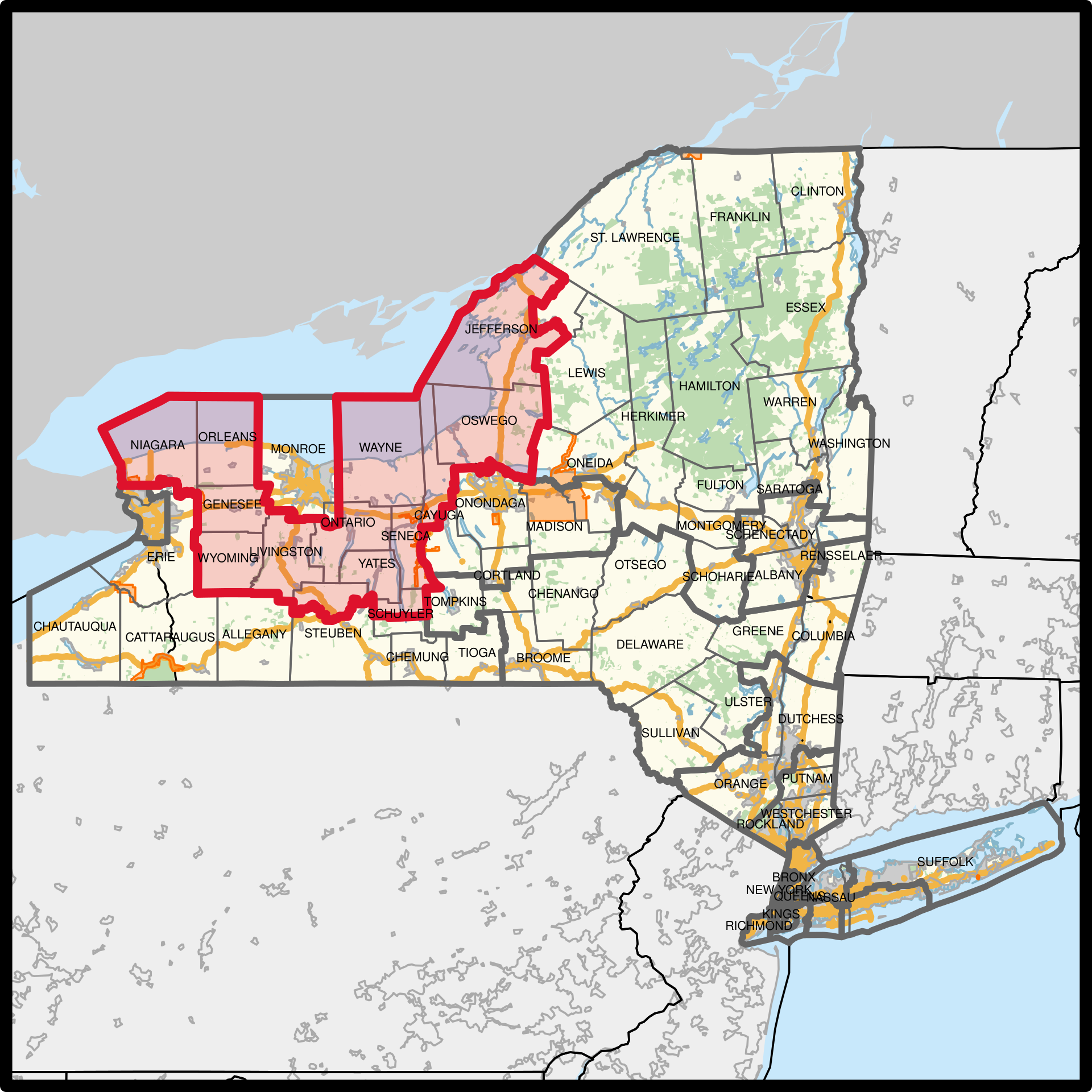
Tenney, a woman who boasts about her love of Canada, of hockey, of curling and of showing her horses at the Royal Winter Fair in Toronto is frustrated with us.
When we are losing allies like Tenney, there is a problem.
Like Hoekstra, she believes we could be getting a deal, but we simply aren’t coming to the table.
The list of Canadian regulations that discriminate against U.S. producers is extensive: restrictions on U.S. seed exports, the Online Streaming Act which imposes new unfair requirements on U.S. streaming services operating in Canada, and unacceptable restrictions on access for turkey farmers. On all of these issues, the U.S. trade representative has raised them with the Canadians, and yet Canada has given no meaningful engagement.
Instead, Team Carney is playing the waiting game.
Louise Blais, a former Canadian diplomat and advisor on cross border issues was recently named an emissary for the Quebec government for the CUSMA review. She told National Post a few weeks ago that there is real risk in Canada playing the waiting game.
“Quebec believes that we need to engage constantly and without delay. The uncertainty is having real impacts,” said Blais. “We have companies now that are closing in Quebec,” she said, adding that the forestry sector and its related industries are hit particularly hard.
That same article pointed to the shut down of South Shore Furniture, an 86 year-old furniture maker that shut down blaming the tariffs. People are losing their jobs and yet, we continue to play the waiting game.
Back to Hoekstra…
In his interview with CBC, Ambassador Hoekstra made it clear that the Trump administration is unhappy with Canada’s extra retaliatory measures - like the booze ban.
Other than Alberta and Saskatchewan, every other province has banned the sale of American booze. Hoekstra told CBC that the United States is not negotiating tariffs over booze bans.
Hoekstra also denounced the procurement policies of several provinces that focus on buying local, as well as messages from certain politicians discouraging travel to the United States.
Last December, for example, Ontario Premier Doug Ford announced he was cancelling his traditional annual trip to Florida in protest of the U.S. tariffs.
“For us, it’s a very interesting contrast,” Hoekstra said. “We’re not telling people don’t buy Canadian products, and we’re not telling people don’t travel to Canada.”
A point that many Canadians miss, as did CBC in this piece, is that Canada’s retaliatory measures against the United States go above and beyond a simple response to Trump’s tariffs.
In response to the 232 tariffs on steel, aluminum and autos, we imposed our own tariffs on those goods from the United States. From the end of March until September 1, 2025 we also imposed billions of dollars worth of tariffs on CUSMA compliant goods, including many grocery items.
The Americans never tariffed food exports or consumer goods coming out of Canada.
We have counter tariffs, we have ramped up buy Canadian government purchasing, we have banned American booze, our politicians encourage all of us to boycott American goods and American travel.
They are doing none of that south of the border.
Do they have official Buy American policies on infrastructure projects that I would like to see go? Absolutely, just look at the requirements from the Federal Transit Administration.
Still, we continue to shoot ourselves in the foot by going over and above.
Why do we do it?
I think too many Canadians think it’s showing how “tough” we are, that we can stand up to the Americans.
I think it’s foolish and it is simply harming Canadians working in industries hit by the tariffs. If you are in the laptop class, if you are retired, then these tariffs aren’t hurting you but if you are in these impacted industries then you are worried about your job.
We owe it to our fellow Canadians to get to the table and negotiate a better deal.
Tariffs aren’t going away, but we can negotiate to get them lower.
Stop waiting Mr. Carney.
P.S. - I could go on at length about the ridiculous and idiotic decision by the CRTC to demand American streamer spend 15% of their total Canadian revenues on Canadian content, but I’ve already covered that at length in my column for the Toronto Sun. I also wrote another piece with a view you won’t hear from most of the media, this CRTC decision is also detrimental to Canada’s broadcast industry.
Carney can afford to make a mess of the negotations. The mood among Liberal voters today is that any misfortunes that result are Trump's fault. The government-funded Canadian media will cover for any missteps on Carney's part. And even if they didn't, that cake is baked. They won't change and the rest of us must live with the results for now. It troubles me that the more talented young people are leaving but I can't honestly counsel them to stay.
Among his many problems (which become Canadian problems) Carney thinks that he is smarter than almost everyone in the room. Carney as a banker was celebrated, treated with admiration and his opinion was valued in financial circles. He does not understand the ‘servant’ part of being a public servant.
When he couldn’t ‘beat’ Trump, Carney pouted, took his hockey sayings and came back home and pretended that he is tough. Many Canadians buy the tough thing because we smugly think we are better than Americans – with absolutely no concrete evidence that we are better than our neighbours.
That is why Carney continues to create disastrous MOU’s with Smith – he wants to win, he doesn’t care who gets hurt.