


On February 4, 2005 I was standing on the pavement outside of Rideau Hall in Ottawa watching as Stephen Harper arrived to be sworn in as Prime Minister of Canada. I had been assured by my media colleagues that this day would never happen, that Harper had no shot of ever leading a government.
Today, he and his former colleagues are celebrating the 20th anniversary of that swearing in and on Tuesday, he had his official portrait unveiled on Parliament Hill.
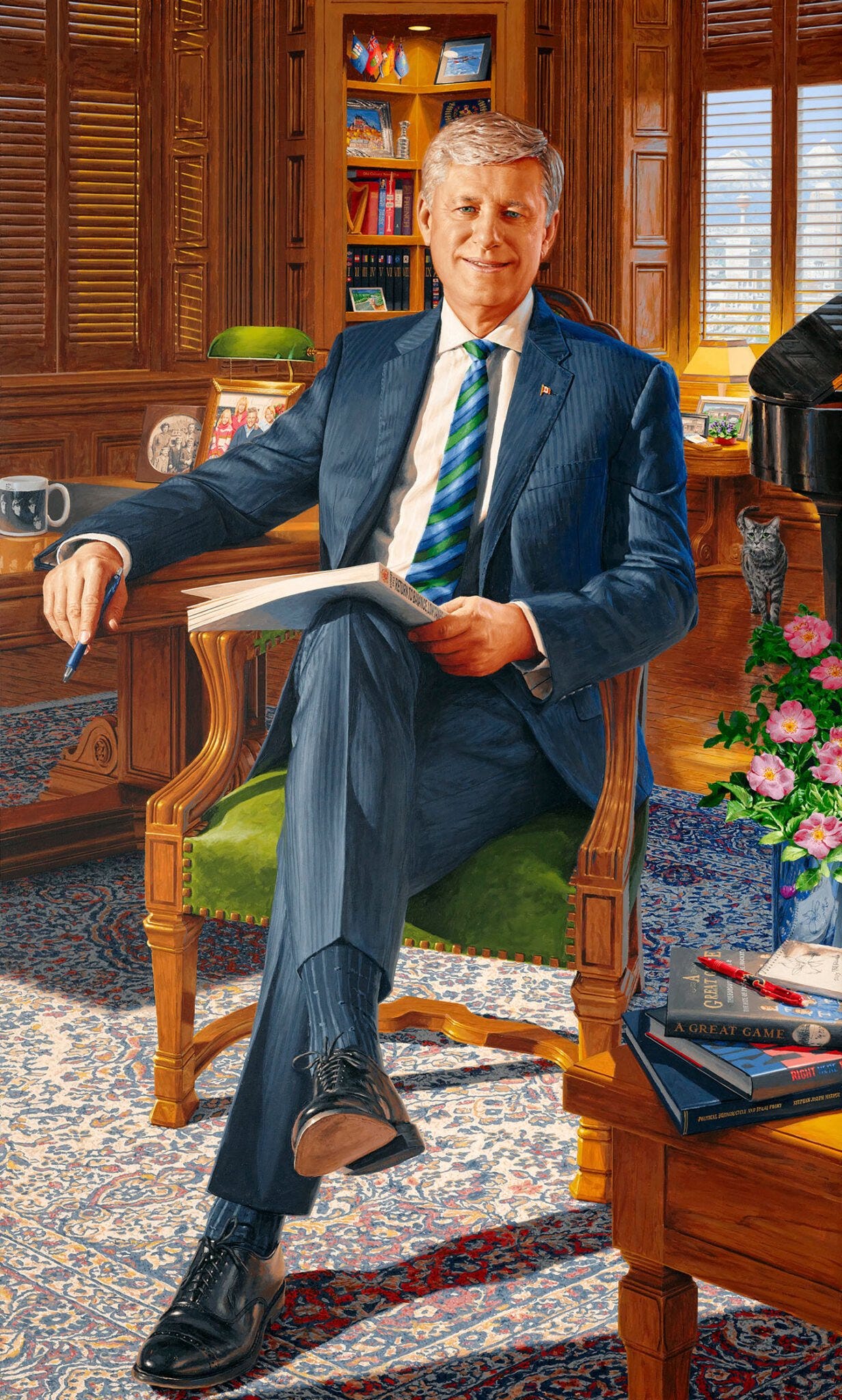
It’s a great portrait that captures the man in my view. One thing about these official portraits is that they contain tiny details about the person being portrayed, you can read about those details in my other post here.
But back to those claims that Harper would never be PM.
This was a widely held view that I heard in the halls of Parliament for months. The big names of the gallery back then, many of them now faded from the limelight, would pontificate to us younger and less experienced journalists.
Here are some of the things I heard.
Harper is too mean, the public won’t like him
How can Harper beat an experienced businessman like Paul Martin?
Harper doesn’t have any international experience, he’s never even been to Europe to go backpacking with a Canadian flag sewn on his bag. He’ll embarrass Canada!
He has a secret far right wing agenda
On and on it went.
None of those things turned out to be true. The public did warm up to Harper and entrusted he and his team with a majority government. He defeated the juggernaut in January of 2006 in an election where the Conservatives started well behind the Liberals.
There was no secret agenda, it never existed despite repeated claims by Liberals and the media.
As for the international stage, Harper was widely respected by fellow leaders.
He became the respected elder statesman of the G7
He negotiated trade agreements that covered 39 different countries including Korea, the TPP and the EU.
He also moved forward on expanded trade with India
When the economic crisis happened in 2008, Canada was seen as a leader in the G20 response to stablize markets and banks with Harper leading a committee for the group.
Harper worked closely with both American presidents he served alongside, seeking to ensure smooth trade with integrated policies but ensured he was never too close.
During the election that brought Harper to power, I was working for CFRB in Toronto, now Newstalk 1010, and CJAD Montreal as part of the old Standard Broadcasting group. It was a very long election that straddled Christmas and at the beginning of the campaign I was told that I would be going on the road with the PM, meaning I was covering Paul Martin.
Towards the end of the campaign we were having a planning meeting for the final weeks where my boss told me that I would be moving to cover the Harper Conservatives.
“You said I would be covering the prime minister!” I objected.
“You are,” came the reply.
We then got the briefing from our pollsters, Darrell Bricker and John Wright who were both at Ipsos at the time. They had just completed their latest round of polling showing the Conservatives would be forming government.
On January 23, 2006 the Conservatives won 124 seats to the Liberals 103. Martin’s juggernaut was no more and the Harper era had begun.
Just 12 days later Harper and his team were being sworn in at Rideau Hall including David Emerson who surprised everyone because he was a member of the Martin cabinet who was now crossing the floor.
But that’s a story for another day.
The criticism of Harper then, sounds similar to the criticism of Poilievre today.
One of the best Prime Ministers we ever had. Especially considering who replaced him.