


Today’s newsletter is brought to you by Unfreeze Ontario
Property taxes should be fair for everyone.
We're calling on the province to restore regular property reassessments, which have been frozen since the pandemic.
Frozen assessments don’t freeze tax bills. They affect how the bill is divided, leaving some homeowners and businesses paying more while others pay less. A regular reassessment cycle from the province is a straightforward way to restore fairness.
To learn more, visit UnfreezeOntario.ca.
Digital ID, carbon taxes and more oh my…
We may soon have digital ID, a renewed focus on carbon pricing and be headed back to net zero.
Or not.
The simple truth is that we don’t know.
The Canada-EU Summit is over and, as I write my column for the Toronto Sun, there is plenty we don’t know, including what to call this thing.
Is it an Alliance for the Future? Are we talking about associate membership? Is it both?
Thinking about all the promises, the vague suggestions of what might happen, I was reminded of these lyrics from The Boxer by Simon & Garfunkel.
“For a pocketful of mumbles
Such are promises
All lies and jest
Still a man hears what he wants to hear
And disregards the rest”
That kind of sums up the statement, the news conference, the whole affair. Especially the part about people hearing what they want to hear and disregarding the rest.
Mark Carney’s staunch supporters will cheer him on, saying that he, the master dealmaker, is moving us closer to Europe. They won’t care what the details say. They won’t care that, time and again in the statements, the focus turned to aligning our regulations. They will just see Europe as good and Orange Man as bad.
Some of the vague promises that will get some people worked up.
“We have set an ambitious agenda at the first Canada-EU Digital Partnership Council and have signed memoranda of understanding on Artificial Intelligence and on Digital Credentials, Digital Identity Wallets and Trust Services.”
“Carbon pricing and industrial decarbonisation alongside clean-tech value chains are key to reaching our shared 2050 net-zero and decarbonisation goals.”
“We aim to align strategies and bring our standards closer through CETA, connect industries, and focus our ambitions on sectors with greatest returns for our peoples. This includes the development of safe and sustainable low-carbon energy that much of the world currently needs.”
That last statement about some energy forms being “low-carbon” might be illegal under EU regulations that we might have to adopt later.
Sorry to go on about regulations so often...
Those of you reading me every single day have heard this many times before, but a key thing we need to know in this deal is how we align on rules, policies and regulations. We aren’t hearing about that from Carney. He’s trying to sell everyone on easier backpacking and study experiences for young people and easier sabbaticals in Paris for researchers.
What about who is designing and passing the rules we all have to live by for manufacturing, trade and consumer goods?
Carney isn’t thinking about it, but EU Commission President Ursula von der Leyen is, because she was talking about it again at the C.D. Howe Institute event in Montreal.
She has been clear that moving our relationship closer means aligning our policies, our programs and our governance.
No country has been able to do that with the EU without surrendering sovereignty to Brussels.
Normally, I point to Norway, Iceland and Liechtenstein as examples, but escaping the regulatory swamp that is Brussels is why Britain left the EU. There have been attempts since Brexit to give Britain deeper access without being a member, and they always fail because London wants to make rules for Britain and the EU insists those rules must come from Brussels.
If Mark Carney is planning on surrendering sovereignty to the EU, he should tell us.
Carney dodging questions...
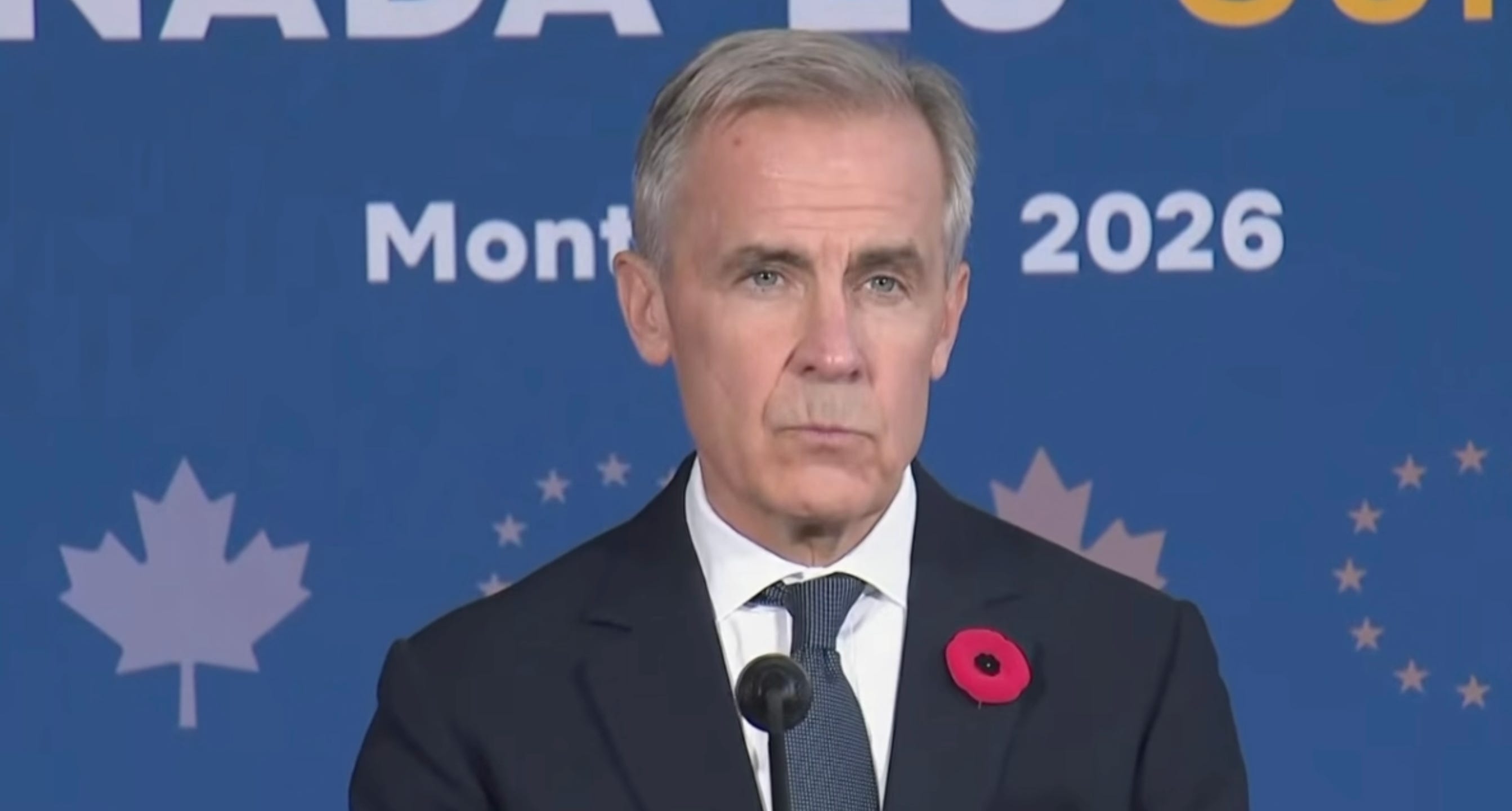
Christian Noël is a French-speaking journalist with Radio-Canada, that’s the French-language arm of CBC. He asked what I thought were really good questions of Carney but didn’t get a real answer.
Let’s be clear: he got a reply, but not an answer, especially not on the regulatory issue, which he pressed him on.
Given that the exchange was in French, I’m posting the translated transcript rather than the video. It’s a rough but fairly accurate translation.
Noël: “This is a two-pronged question.
First of all, for people at home, becoming an associate member, what does that change for the everyday person in their lives and around the cost of living? And for those who fear getting bogged down in European bureaucracy, what would you say, Mr. Carney? How, and in what cases, would you like to see compromises with the EU or regulatory compromises?
Carney: “Well, first of all, as for opportunities for the everyday Canadian, let’s start with affordability. More choices, you know, for European goods and services here in Canada. A financial sector that is more competitive, and that’s because institutions and payment systems from Europe would also be here in Canada. For the everyday person with children,
Well, great opportunities for children and young people because they’ll be able to study in Europe, and to have European students come here to Canada. Opportunities to travel and work, all of that will be facilitated. It will be faster. Cultural opportunities.
There are a number of them, but essentially, you know, it’s not a requirement to go to Europe to experience the benefits of this partnership.
Now, as for your second question, the important thing is that with this approach... well, listen. The world is dynamic, and the same thing goes for the economy. We are both developing new approaches. For example, AI. We can co-develop these approaches now. It’s more efficient. At the very least, it will be more efficient and, in my opinion, more productive. And it will be developed even better.
Second of all, there is a process in Europe, and there’s one here in Canada, and this has to do with, you know, overlapping regulatory provisions.
But this partnership will strengthen our efforts to bring down that multiplication of regulations. We are going to concentrate on these opportunities and examples in the future.”
Meanwhile, my colleague at the National Post, Chris Nardi, asked Carney questions about carbon tariffs and EU deforestation rules and also didn’t get an answer.
Carney says those things are fixed, that they negotiated them away. The documents released by all sides say it’s an ongoing discussion. That’s also what officials said while mopping up after the leaders left the press conference.
There is more to say on the digital ID and carbon pricing issues, but that will be for another day.
This week has been like drinking from a fire hose for me, and I fear I’m overloading all of you as well.
Check back tomorrow for more.
Overall a very scary prospect of losing our sovereignty IMO. But USA bad, Europe great so yay! Carney seems prepared to hand over control to Brussels completely. How is that a good thing? Edit: And on whose authority?
There is NO upside to Canada joining up to the EU in any capacity. None whatsoever and what does Brussels know or care about Canada and Canadians other than what we have to offer.