


Apparently, we’ve reached the point where some people think the War of 1812 isn’t Canadian history and that the death of Isaac Brock 214 years ago has nothing to do with modern Canada.
This ridiculous claim is being made by people upset at Prime Minister Mark Carney posting about the anniversary on X Tuesday afternoon.

Was this post political?
Absolutely.
Is it still relevant for Canadians?
You bet your life on it.
Brock wasn’t just a British general, he led a force of British regulars, Canadian militia and Indigenous allies. He died leading the defence of Upper Canada against an American invasion at Queenston Heights. If that battle had gone the other way, Canadian history might have unfolded very differently indeed.
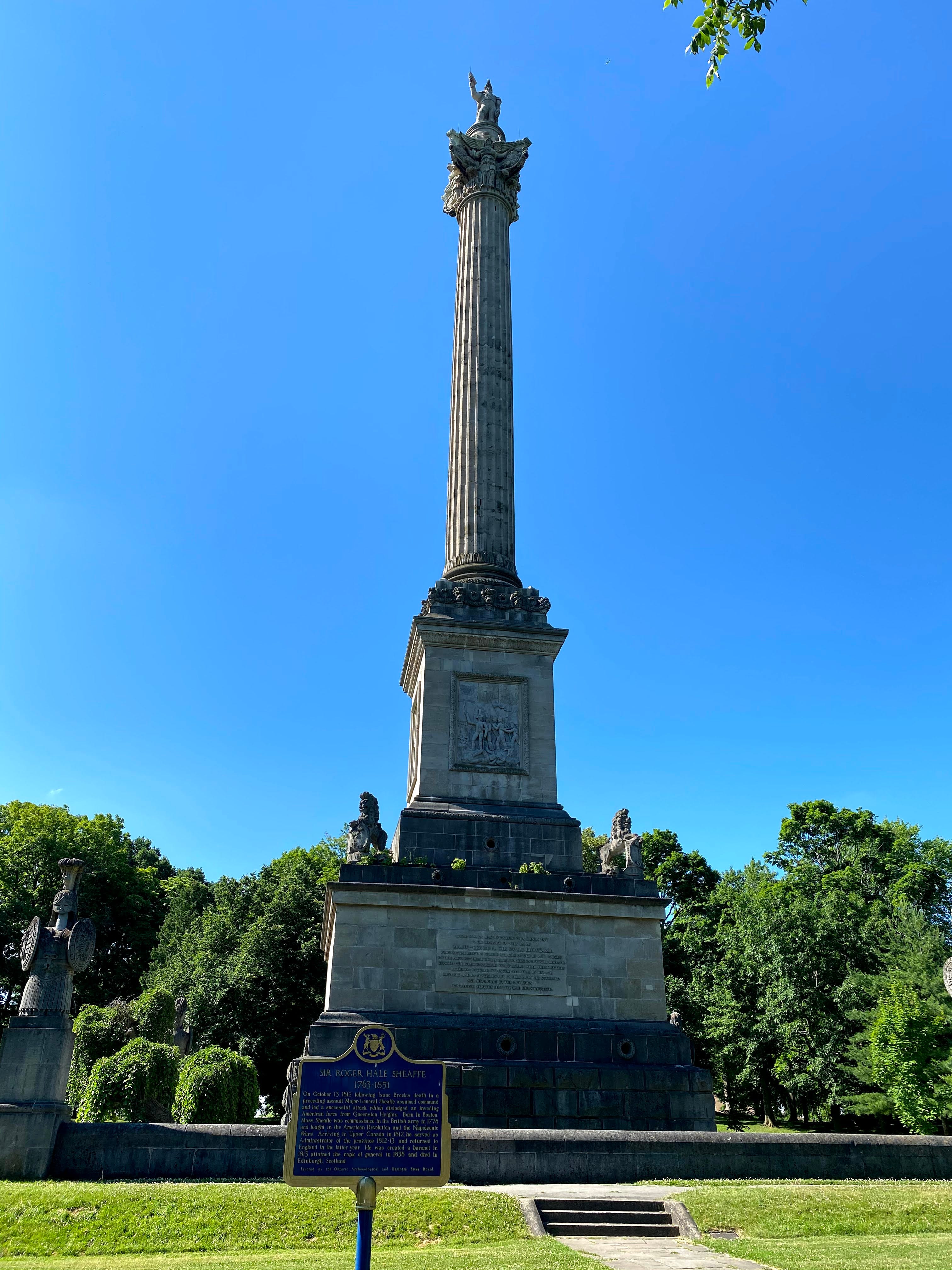
Back in 2012, when the Harper government decided to celebrate the 200th anniversary of the War of 1812, it was Liberal supporters, New Democrats and, of course, the Bloc Québécois all claiming that this war had nothing to do with us. Now, because the person posting the figurine of General Brock is a Liberal PM, we have Conservatives reaching for the smelling salts.
I’m sorry, but we don’t change what is, or is not, our history based on which party is in power.
Those claiming that anything that happened before July 1, 1867, wasn’t Canadian history have no real sense of history. That date is when Canada became a confederation, the Dominion of Canada, not the date that Canadian history began.
No one suggests that American history began in 1789 when the Constitution took effect or that British history started when the United Kingdom was formed in 1707. Nations have histories before they become the countries we recognize today.
Our history stretches back through the centuries...
Just as the War of 1812 is Canadian history, so too is the Seven Years’ War, which saw Quebec transfer from French to British control. The American Revolution is Canadian history as well, given that the Quebec Act, a result of the Seven Years’ War, was one of the reasons for the revolution.
The La Vérendrye brothers, thought to be the first people of European descent to see the Rocky Mountains, also mapped out much of the Northern Plains in what are now North Dakota, Manitoba, Saskatchewan and Alberta. Their voyages in the 1740s are part of Canadian history.
The arrival of John Cabot and Jacques Cartier on the shores of this great land are part of Canadian history, even though Cabot landed in Newfoundland in 1497 and Cartier in Quebec in 1534. Cabot was 370 years before Confederation and Cartier was 333 years before we became a Dominion.
We had the Norse settlement in Vinland sometime around 1021, and that too is Canadian history.
We can say the same for the centuries of Indigenous history, much of it not recorded, but what we do know of it is still Canadian history.
We came from a people, or peoples, and became Canadians...
The idea that Canada magically happened on July 1, 1867, and that anything before that is not Canadian history is ridiculous. Yet it’s something I’ve been fighting for years, and it is always motivated by partisanship and/or ignorance.
I have a very thick book that sits behind me on my bookshelf called Canada’s Founding Debates. It documents the debates that were held in the colonial legislatures from Newfoundland to British Columbia on joining, or rejecting, Confederation.
These debates happened because of the inheritance of the Westminster system of government that we adopted from Britain. Yes, we were a British colony, and part of the country was a French colony before that, but that legacy of democracy is also part of our history.
It is remarkable to sit in Parliament, as I have done, and listen to the Speaker read out rulings that invoke the English Bill of Rights of 1689 as a foundational constitutional document for Canada.
We trace our fight for democracy, for representative government, back to the Magna Carta and the nobles forcing King John to sign it at Runnymede in 1215. No, that didn’t happen in Canada, but what happened in the meadows on that June day 811 years ago informs how we govern ourselves today.
Canadian history is rich, it is complex, and it is about so much more than what has happened since Dominion Day in 1867.
Embrace it, learn it, celebrate it.
Because if we can’t agree on our own history, we’re going to have a hard time agreeing on our future.
The most likely outcome in Canada is:
- Alberta severs equalization
- Quebec negotiates a bilateral USA deal
- Bessent’s economic actions turn from Tehran, to HK, and to Canada
- Canadian banks lose USD access
- Alberta negotiates a bilateral USA deal
- Canadian dollar, Bank of Canada, Government of Canada balance sheet all blow up
- with no more Federal commercial ties, Canadian provinces each negotiate their own north-south bilateral agreement with DC
- Canadian Provinces take control of their portions of U.S. border to enforce their own USA market access deals.
- each Province takes more sovereignty from Ottawa by accessing reinvigorated Treasury-led US financial system
- Parliament keeps some lights on
Canada doesn’t need some declaration of its demise. When the east-west Federal economic system breaks, its politics will follow. We’re past the world of arguments. It’s about incentives.
Canada will last as long is people’s appetites for pain and poverty.
This man and his government have no concern for this country only their whims, and aspirations of a so-called new world order whatever that is. The history of a country is fundamental to the moral and ethical values of a country. In my opinion, here, they are eroding rapidly.