


Today’s newsletter is brought to you by Door Dash

Every day, DoorDash helps make a difference for hardworking Ontarians across the province.
Whether it’s creating real growth opportunities for local merchants to reach more customers, providing Dashers with real flexibility to earn extra income, or helping all of us find time for what really matters, DoorDash empowers Ontario communities.
By supporting local businesses, creating new opportunities, and helping Ontarians thrive,
DoorDash is delivering real impact that goes beyond delivery.
Real Insight of the Day: 80% of consumers say they have used DoorDash to discover new restaurants or retailers.
Learn more at: Door Dash
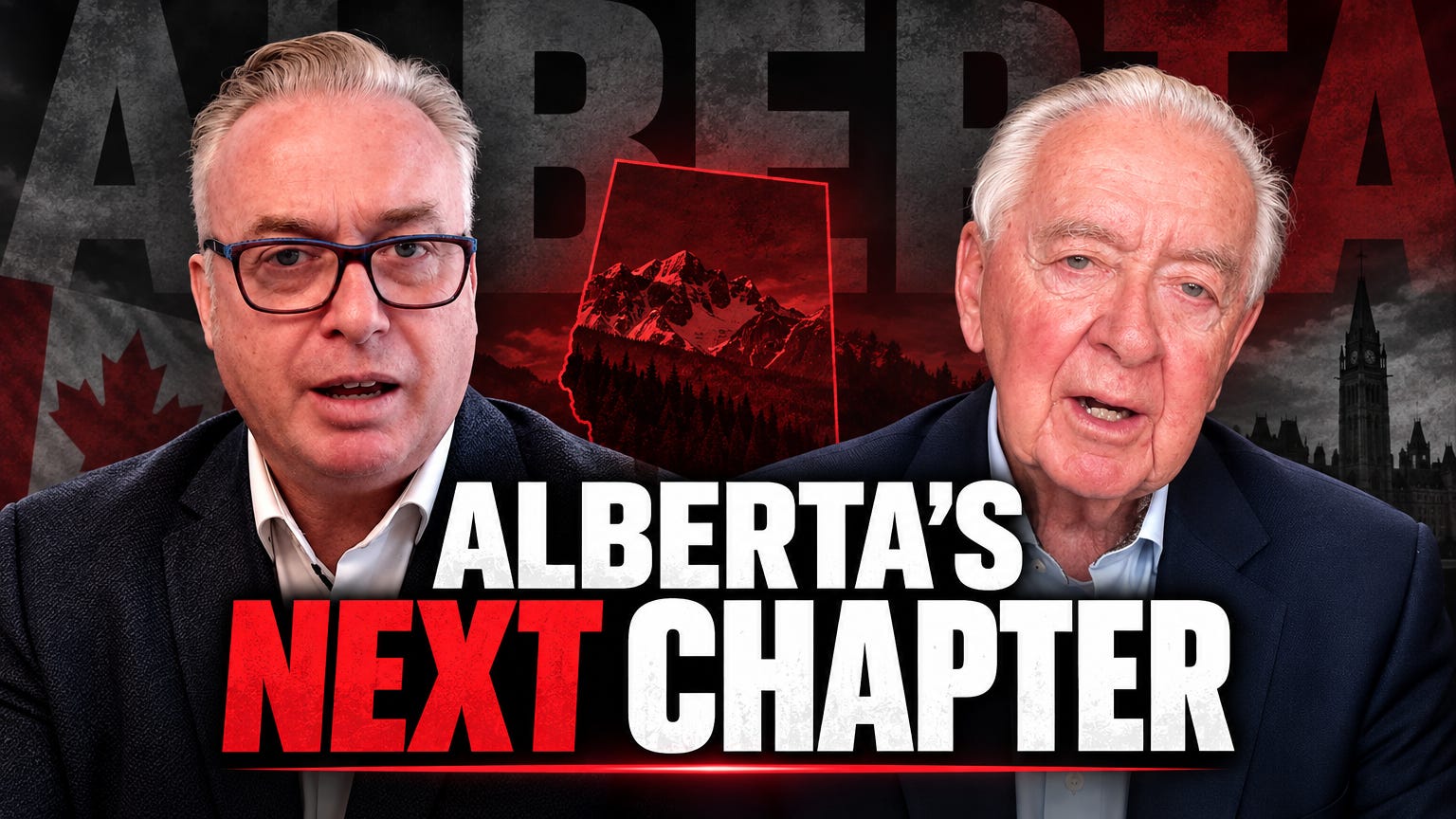
The West still wants in…
Few people have had as much impact on Canadian politics without ever holding high office as Preston Manning.
He may never have become our PM but he shaped the policies of Jean Chretien and helped force the Liberals to balance the books in the 1990s. He forever changed the nature of conservative politics in Canada with the launch of the Reform Party.
Manning showed up in Ottawa with his message that the West wants in.
Despite all that he accomplished, despite all that his protege Stephen Harper accomplished, that message remains.
Manning was key to the panel that drew up the policy questions for the referendum that Alberta held on October 19 and he’s still active in pushing for reforms.
It’s always a pleasure to speak with Preston Manning and I hope to see him soon in Calgary, but for now, here is our conversation on Alberta’s next steps.
This is an auto generated transcript that has not been edited. There will be spelling mistakes and names will be wrong. I post it for those who wish to read rather than watch, but beware, there will be errors.
Preston Manning on Alberta’s Future, Western Alienation and Constitutional Reform
Brian Lilley: On October 19, the vast majority of Albertans voted to stay in Canada, but that is not the end of the discussion about the Alberta-Canada relationship.
I’m Brian Lilley, political columnist for the Toronto Sun.
There have been issues in the relationship between Alberta and Ottawa for years. It’s nothing new, but it came to a head on October 19 when Albertans voted on ten referendum questions. One of them asked whether Alberta should move toward a binding referendum on separation.
The overwhelming answer was no. Albertans voted to remain in Canada. But the other nine questions sent a message to Ottawa that many Albertans are unhappy with how the federation is functioning.
What comes next?
That’s something Preston Manning has been thinking about for years. Manning was the founder of the Reform Party and helped popularize the idea that “the West wants in.” More recently, he participated in the Alberta Next panel and is involved with the new Alberta and the West Assembly report.
Preston, thanks for joining me. Before we get into the report, how are you feeling about the Alberta-Ottawa relationship these days?
Preston Manning: I think there are still major causes for strain. Some can be remedied by changes in federal government policy, while others are structural problems that would require constitutional change, which is obviously very difficult to achieve in Canada.
The position that received the largest level of support in the October 19 referendum was “Remain.” But the more important question was: remain and do what?
Almost every group that supported remaining in Canada rejected the status quo. The one leader who clearly answered that question was Premier Danielle Smith. Her answer was to remain in Canada while building a strong and sovereign province within, not separate from, the federation.
To me, that’s one of the key takeaways from the referendum.
Brian Lilley: People who watch my work won’t be surprised when I say I’ve become a big fan of Premier Smith. I’ve known her for more than 15 years, dating back to her time leading the Wildrose Alliance and her years outside politics. In my view, she’s done a very good job navigating this new environment under a new prime minister.
I would argue she’s scored several wins with Prime Minister Mark Carney. Would you agree?
Preston Manning: I think the jury is still out on how much progress is being made with Carney.
But on the broader issue of a sovereign province within the federation, Smith has been quite clear. It means strengthening Alberta’s role in every area the Constitution already assigns to the provinces. It means pushing harder in areas of shared jurisdiction such as agriculture, the environment and immigration.
The first five questions on the referendum dealt with immigration, and all of them passed. That provides support for Alberta pushing further in that area.
The third component is one that doesn’t get enough attention. The federal government frequently intrudes into areas of provincial responsibility. This isn’t just an Alberta issue. Several provinces object to it.
One thing Ottawa could do is pass legislation respecting provincial sovereignty. That could involve repealing or amending federal laws that intrude into provincial areas. Examples would include the Impact Assessment Act, the Canada Health Act, the Canada Housing Act, the Canada Infrastructure Bank Act and even parts of the Emergencies Act.
Brian Lilley: I don’t see that happening. Federal governments, especially Liberal governments, enjoy inserting themselves into areas of provincial jurisdiction. They like making the promises and taking the credit.
This isn’t new. During the Depression, R.B. Bennett suggested a national unemployment insurance program. Mackenzie King opposed it as unconstitutional, then later brought one in himself after amending the Constitution.
Preston Manning: Governments can continue doing that, but they are straining federal-provincial relations and creating national unity problems.
And it’s not just Alberta. Newfoundland is unhappy about federal intrusion. Quebec is unhappy about federal intrusion.
One possible solution is a larger bargain. Ottawa could agree to withdraw from some areas of provincial jurisdiction while provinces agree to remove internal trade barriers, which impede federal authority over trade and commerce.
Politics often comes down to horse trading.
Brian Lilley: Your report offers five recommendations. Let’s walk through them.
The first is to “strongly and vigorously pursue the development of provincial sovereignty within, not separate from, Canadian Confederation.”
Is that essentially what you’ve been talking about?
Preston Manning: Exactly.
Strengthen provincial authority where provinces already have responsibility. Push further in areas of shared jurisdiction. Pressure Ottawa to withdraw from areas where it has overreached.
This isn’t new. The Alberta legislature passed the Sovereignty within a United Canada Act back in 2022. We believe the province can continue pushing more firmly in that direction.
Brian Lilley: I’ll admit that living in Quebec changed my perspective on these issues. I used to wonder why Quebec was always complaining about Ottawa. Then I realized the federal government regularly muddies accountability by spending in areas it’s not responsible for.
Take health care. It’s constitutionally provincial, yet Ottawa funds a large portion of it. When things go wrong, provinces blame Ottawa and Ottawa blames provinces.
Preston Manning: Canadians care deeply about health care. The problem is they don’t always realize that federal constraints can hinder innovation.
Imagine Ontario decided to adopt a model similar to Sweden’s mixed public-private system. Ottawa could potentially reduce funding because the province was deviating from the framework established by the Canada Health Act.
The act effectively discourages innovation.
If Ottawa simply transferred health-care funding based on population and required only that access be universal regardless of ability to pay, provinces could experiment with different approaches. We’d likely see much more innovation across the country.
Brian Lilley: I think health care absolutely needs reform and more flexibility.
Let’s move to your second recommendation. You suggest Western leaders should sharpen and strengthen their communications with the prime minister.
Are you talking about more open letters?
Preston Manning: Not exactly.
Premiers Danielle Smith and Scott Moe, along with numerous business leaders, have already written to Ottawa. What we’re suggesting is that those requests become more specific.
Attach deadlines.
If you’re asking Ottawa to repeal legislation, don’t simply request it. Draft the legislation yourself and put it on the prime minister’s desk.
Anybody can write a letter asking for change. If you’re serious, show exactly what change you want and by when.
Brian Lilley: I like that approach.
We’ve been seeing something similar with Doug Ford and the Stellantis situation in Ontario. Rather than broadly complaining, Ford is now specifically arguing that federal industrial carbon taxes and tailpipe regulations undermine competitiveness and threaten jobs.
Being specific focuses attention.
Preston Manning: Exactly. It doesn’t have to be antagonistic. It’s about solving problems.
Be precise. Set deadlines. Draft the legislation.
Brian Lilley: Your third recommendation deals with the Alberta-Ottawa memorandum of understanding regarding major energy infrastructure projects.
You argue that risks and liabilities should be more clearly identified.
Preston Manning: Yes.
One of the biggest barriers to private sector investment is uncertainty.
That memorandum contemplated the Pacific Link pipeline having a private-sector proponent by now. It doesn’t.
Investors want answers. What’s the cost? Who carries the liability? What happens if projects run over budget? What happens if a carbon sequestration project doesn’t proceed?
Without clarity on those questions, uncertainty discourages investment.
Brian Lilley: One of the problems seems to be that governments haven’t done enough to create a stable regulatory environment.
Preston Manning: Put yourself in the position of an investor.
You’re being asked to invest in a pipeline while navigating a federal government focused on carbon reduction, a provincial government focused on exports, competing Indigenous interests and shifting provincial politics.
That’s a great deal of uncertainty.
Brian Lilley: And uncertainty exists across much of Canada’s economy right now.
Preston Manning: It does.
I’ve read Mark Carney’s book twice. He’s quite clear in arguing that government should play a leading role in economic development.
That philosophy is very different from how Canada’s major pipelines were originally built. The Interprovincial Pipeline, Trans Mountain and the TransCanada pipeline all originated with private-sector proponents. Governments became involved later, largely through regulation and financing.
Today’s model is much more government-driven.
Brian Lilley: Your fourth recommendation calls for a Western constitutional accord.
What would that look like?
Preston Manning: Prime Minister Carney delivered major speeches in Alberta before the referendum, and there was virtually no discussion of the structural issues underlying Western dissatisfaction.
There are four main concerns.
First, Western Canada remains underrepresented in federal institutions, particularly because Senate reform never occurred.
Second, many Westerners believe the equalization formula is inequitable.
Third, there are insufficient safeguards against federal intrusion into provincial jurisdiction.
Fourth, Canada lacks meaningful constitutional protection for property rights.
Our recommendation is that Western Canada develop a package of constitutional reforms addressing those concerns so it is prepared whenever constitutional negotiations inevitably return.
Brian Lilley: The property-rights issue is fascinating. Pierre Trudeau refused to constitutionalize property rights, and the old Bill of Rights never provided much protection.
Preston Manning: That’s right.
The weakness of the Bill of Rights is that it protects due process but does not guarantee just compensation when property is taken.
That’s what gives property-rights protections real strength in jurisdictions such as the United States.
Addressing those four structural issues would go a long way toward reducing Western alienation.
Brian Lilley: Your final recommendation is to strengthen Alberta’s bargaining power, not through threats of secession but through greater Western unity.
Preston Manning: Yes.
Some people argue that having secession in the background strengthens bargaining leverage. Our conference concluded otherwise.
The referendum did not provide strong support for separation.
The better strategy is to unite Western provinces around specific objectives and pursue them consistently over time. Alberta, British Columbia and Saskatchewan working together can significantly strengthen their influence.
Brian Lilley: Before we wrap up, I want to ask about the Supreme Court’s pending decision on Quebec’s Bill 21.
I’m not a supporter of the law, but I am concerned that the court could attempt to weaken or restrict the notwithstanding clause.
What are your thoughts?
Preston Manning: I’m not a supporter of Bill 21 either.
But people should remember that inclusion of the notwithstanding clause was a condition precedent for Alberta and Saskatchewan agreeing to the Constitution. Any effort to weaken it would create another source of Western alienation.
One simple signal Ottawa could send would be withdrawing its intervention seeking to narrow the clause’s scope. That wouldn’t prevent others from making those arguments, but it would demonstrate respect for the constitutional compromise that was reached.
Weakening the notwithstanding clause would be viewed very negatively across much of Western Canada.
Brian Lilley: I recently spoke with Brian Peckford, the last surviving first minister involved in the constitutional negotiations. He describes the claim that the notwithstanding clause was intended only as a rarely used last resort as complete nonsense.
He says that narrative emerged after the fact.
Preston Manning: The broader point is that there are practical measures available to address Western discontent.
These aren’t radical proposals. Most of them would strengthen provincial autonomy while maintaining a strong federation.
No one is arguing that Ottawa shouldn’t handle foreign affairs, monetary policy or national defence. But there are changes that could make the federation work better.
That’s what our report attempts to outline.
Brian Lilley: People can learn more and read the full report at AlbertaAndTheWest.ca.
Preston Manning, thanks very much for your time.
Preston Manning: Great talking with you, Brian.