


Good Friday is always an odd day for me. It always seems long, sombre, like something is missing.
This is especially true starting around 3 pm, “the hour” and usually lasts well into Saturday.
Blame my Catholic upbringing.
On Good Friday, we mark the crucifixion and death of Jesus Christ while on Easter Sunday – which technically and theologically starts at Sunday down on Saturday – we mark his resurrection.
That time in between, at least in the Catholic tradition, is marked by the absence of Christ. The Tabernacle is emptied, the Altar is stripped bare, no Mass is celebrated, there are no bells or music.
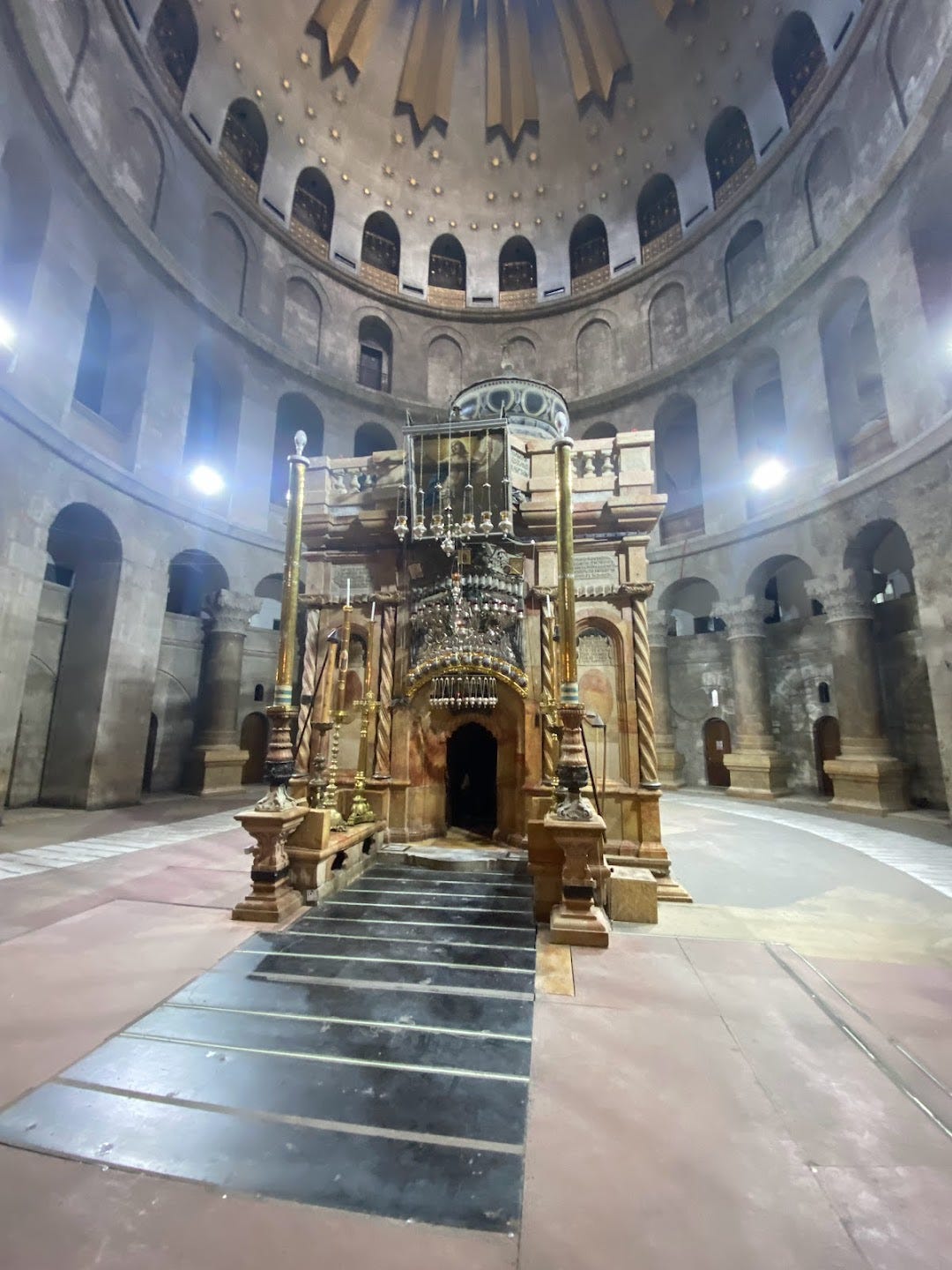
Christ is in the tomb, and we spend time waiting and reflecting on a world without Christ.
The waiting is broken at sundown with the peeling of the bells, the lighting of candles, the singing of hymns and the refrain, “He is Risen, Truly He is Risen!”
I don’t tell you any of this to convert anyone.
Religion and politics do mix...
They say that religion and politics don’t mix, and those are the two things you shouldn’t discuss in public. I find them the most interesting things to discuss and without both of them we would have a very strange world.
I don’t want to talk about partisan politics today, but I do want to discuss the intersection of religion and politics in Canada.
This country was built upon a Judeo-Christian tradition. It has shaped our laws, our institutions; it built our first schools, hospitals, and our social safety net.
If you are a Hindu, Muslim, Buddhist, Sikh, of any other religion at all or no religion this shouldn’t bother you. Accepting that you live in a country founded on Judeo-Christian values and traditions doesn’t require you to convert or change, it is simply an acceptance of fact.
Look at the coins in your pocket.
Pull out a Loonie or Toonnie and look at the back. If it is an older coin, it will say D.G. Regina which is Latin for Dei Gratia Regina, or in English By the Grace of God, Queen.

Our national motto is A Mari Usque Ad Mare, which means From Sea to Sea. This isn’t just to denote that Canada is bounded by oceans, it comes from the Bible, Psalm 72:8.
“He shall have dominion from sea to sea and from the river unto the ends of the earth.”
Our Judeo-Christian heritage may be getting pushed aside, we might be running on fumes, but it is there still and on a day like today, a national holiday on one of the most sombre and important Christian holidays, I’m thinking about it.
The naked public square...
For decades though there has been a push to force religion out of public life. This has been particularly true about Quebec since the Quiet Revolution, but it applies to the rest of the country as well.
This isn’t just about trying to stop people from saying Merry Christmas or Happy Easter.
Far too many Canadians view religiously motivated Canadians with suspicion. Those on the left are obsessed that having elected officials who are grounded in faith means one thing – people trying to ban abortion.
Do they not realize that the push to have universal health coverage in this country – flawed as it is in the administration – was driven by a Baptist pastor named Tommy Douglas? Canada’s decision to do away with the death penalty was driven mostly by politicians appealing to their Christian faith.
We could go further back and look at the abolition of slavery, driven almost entirely by devout Christians.
If we never had Christians working in the public square, would we still have the society we have today?
Hardly.
Be not afraid...
Last week, both Prime Minister Mark Carney and Conservative Leader Pierre Poilievre both spoke at the National Prayer Breakfast and spoke about faith.
Both men are steeped in faith, neither one shares it publicly very often. I’d like to see this happen more, not in a false way, not to win votes, but in an expression of their true and authentic selves.
I thought it worth sharing their speeches here.
In the video below you can find Carney’s speech just after the 53-minute mark and Poilievre’s shortly after the 1-hour mark.
You can also read the text of Carney’s speech below.
The text of Carney’s speech…
Good morning.
Thank you, Richard Bragdon, Speaker of the House Francis Scarpaleggia, Speaker of the Senate Raymonde Gagné, and distinguished guests.
I will begin with a short reading from the Gospel of Matthew 1:23.
“Behold, the virgin shall be with child, and bear a son, and they shall call him Immanuel,” which means “God with us”.
This verse marks the fulfilment of the Prophet Isaiah, and the generosity of God incarnate.
I will organise my brief remarks around generosity in part because generosity is one of the distinguishing features of Canadians. Canadians take care of each other.
I underscore this because we, as parliamentarians, are often called to channel the generosity of those we serve, while balancing it with fiscal realities and the principles of liberty.
The Christian tradition holds that generosity is not an original act. We give because we have first received.
In the original Greek, charis precedes charisma. Grace before gift.
We parliamentarians are only in this room because we have received abundantly. Certainly, a determination that does not recognise obstacles. Probably, an intelligence that is restless. And, one hopes, discernment to see what truly matters.
And what of forgetfulness? Forgetfulness is not something one normally associates with politicians.
But Christ, in the Sermon on the Mount, teaches us that when we give, our left hand should not know what our right hand is doing.
Generosity, at its noblest, does not keep accounts.
Let our generosity be quiet and without witnesses.
And may it be reflected both personally and institutionally.
For generosity is also about being present. It’s giving not only to causes, but to people – to our families, our friends, our colleagues, and to one another.
It’s giving time.
Attention.
Mercy.
Giving time, attention, mercy can be our most lasting legacy.
I once heard a sermon in which the Reverend addressed different perspectives on immortality. Noting the presence of some secularly important churchgoers in the front pew, he challenged us over how many of their distinguished predecessors we could name.
He admitted that he could only manage seven of his own without cheating.
People who went to the horizon of their death feeling like they were the heroes of their own story.
Then, drawing on scripture, he set our transience in two opposing perspectives.
First, from Isaiah and St. Paul, there’s that of “let us eat and drink for tomorrow we die”.
If you set the horizon for your performance review at the moment you die, life is short and pressured, and that pressure degrades selflessness and the service of others.
However, if the horizon goes beyond the grave, and goes beyond for immortal amounts of time, and without all the corruption of death that blights the world, then there is a horizon that puts our lives here into the right perspective.
That’s a life not easily moved by the day-to-day “crises” of work. It’s a life of purpose that can achieve lasting benefit. A life that seeks to advance the trinity of distributive justice, equality of opportunity, and fairness across generations.
And even if those efforts fail, it is a life which recognises that in pursuing virtue we help build it in ourselves and in others.
We expand its practice and give it life.
I know there are some Stoics in the room, so I will close by channelling Marcus Aurelius: Arise for the work of humankind. Be humble. However grand you are today or may become tomorrow, you too will be forgotten. With the centuries, our names will become puzzles.
But our generosity can live on as examples that multiply through values in the service of others. A worthy past sedimented into a better future.
So may we give thanks for the generosity we have each received and which we are now called to pass on.
There is no such thing as evicting religion from the public square. The question is, what sort of religion will dominate?
In many Muslim societies, persecution of other faiths is legal, as is slavery, wife-beating, and marriage to female minors - explicitly because the religion allows it. In Hindu society, caste is a fact of life because the religion allows it.
In Darwinian atheist societies, a war on the weak is allowed because the religion allows it. That is beginning to happen in Canada with MAiD, as it happened in Germany in the 1930s - and Germany had formerly been a world leader in medicine.
If you don't want caste or legal wife-beating or legal sex with children, you should think twice about booting Christianity from the public square but glowing with Woke self-approval about platforming other faiths.
BTW, I am highly skeptical of political leaders' faith statements. When Carney tells us that Muslim values are Canadian values, he is telling us far more about what he really thinks than his attendance at Mass does. That's not because he espouses Muslim values, of course, but because he knows where he can get the votes. And that fact will matter a great deal in what is and isn't allowed in Canada in the future.
Good Friday sentiments to you
"By His wounds, we are healed. Wishing you a quiet, reflective, and blessed Good Friday"
Thank you for reminding us of the core faith that was a critical part of the spirit that created Canada a country that others came to from other continents to contribute and build a life. Sadly, that doesn’t seem to be the motive for many of those come to Canada today and our gate keepers have encouraged this departure of spirit.
"By His wounds, we are healed. Wishing you a quiet, reflective, and blessed Good Friday"